At StepUp Joints, our foundational clinical principle is diagnosis-first knee care. Surgery is never the default option. In patients with mild to moderate cartilage thinning, early meniscus degeneration, or patellofemoral tracking imbalances, non-surgical joint preservation protocols can effectively relieve pain, restore functional mobility, and delay or eliminate the need for surgical intervention.
The Conservative-First Joint Preservation Philosophy
Cartilage lacks direct vascularity, meaning once deep articular defects reach subchondral bone, spontaneous regeneration is limited. However, joint preservation focuses on reducing joint friction, restoring synovial fluid visco-elasticity, and conditioning the surrounding musculature to absorb impact forces before they reach the joint surface.
Arthritis Severity: Kellgren-Lawrence Grading
Suitability for non-surgical preservation correlates strongly with radiographic staging:
- Grade I (Doubtful): Minute osteophytes with normal joint space — prime candidates for conservative lifestyle optimization.
- Grade II (Mild): Definite osteophytes with unimpaired joint space — excellent response to physiotherapy, off-loading, and targeted intra-articular therapies.
- Grade III (Moderate): Multiple osteophytes, definite joint space narrowing, and subchondral sclerosis — multi-modal conservative management can preserve joint function for years.
- Grade IV (Severe): Bone-on-bone contact and profound joint deformity — surgical arthroplasty typically provides the most reliable long-term pain relief.
Biomechanical Off-Loading & Weight Distribution
During normal walking, each stride transmits 3 to 4 times body weight through the tibiofemoral joint. Every 1 kilogram of body weight reduction removes approximately 4 kilograms of cumulative pressure from the knee with every step. Unloader knee bracing can additionally shift load from an arthritic medial compartment to a healthy lateral compartment.
Intra-Articular Injections: Hyaluronic Acid & Biologics
Viscosupplementation involves injecting high-molecular-weight hyaluronic acid into the joint space, replenishing synovial fluid lubricity and reducing mechanical shear stress. Platelet-Rich Plasma (PRP) therapies utilize autologous growth factors to modulate inflammatory cytokines and alleviate joint discomfort.
Closed-Chain Quadriceps & Hamstring Conditioning
The quadriceps mechanism is the chief dynamic shock absorber of the knee. Structured, low-impact closed-chain resistance training (wall squats, straight-leg raises, stationary cycling) reinforces knee stabilization without imparting destructive shearing forces across sensitive cartilage.
When Conservative Treatment Reaches Its Ceiling
If a patient develops severe night pain, progressive fixed-flexion deformity, bone-on-bone friction on weight-bearing X-rays, and significant limitation of basic activities of daily living despite 3 to 6 months of structured non-surgical care, definitive surgical intervention should be discussed openly.
Frequently Asked Questions
Q: How long can non-surgical treatment delay a knee replacement?
In patients with Grade II or III osteoarthritis who maintain a healthy BMI and adhere to regular strengthening exercises, conservative preservation can successfully manage symptoms for 5 to 10+ years.
Q: Are hyaluronic acid gel injections painful?
No. The procedure is performed in an outpatient clinic room under local topical anesthetic and takes less than 5 minutes with minimal discomfort.
Q: Can walking worsen my knee arthritis?
Moderate walking on level surfaces in cushioned footwear strengthens muscles and nourishes joint cartilage. However, high-impact running or stair-climbing on inflamed joints should be modified.
Related Guides & Treatment Pathways
Comprehensive Knee Pain Management
Explore conservative joint preservation pathways and clinical evaluation.
Knee Rehab Exercises & Protocols
Targeted strengthening routines to stabilize and protect your knees.
48-Hour Video Scan Review
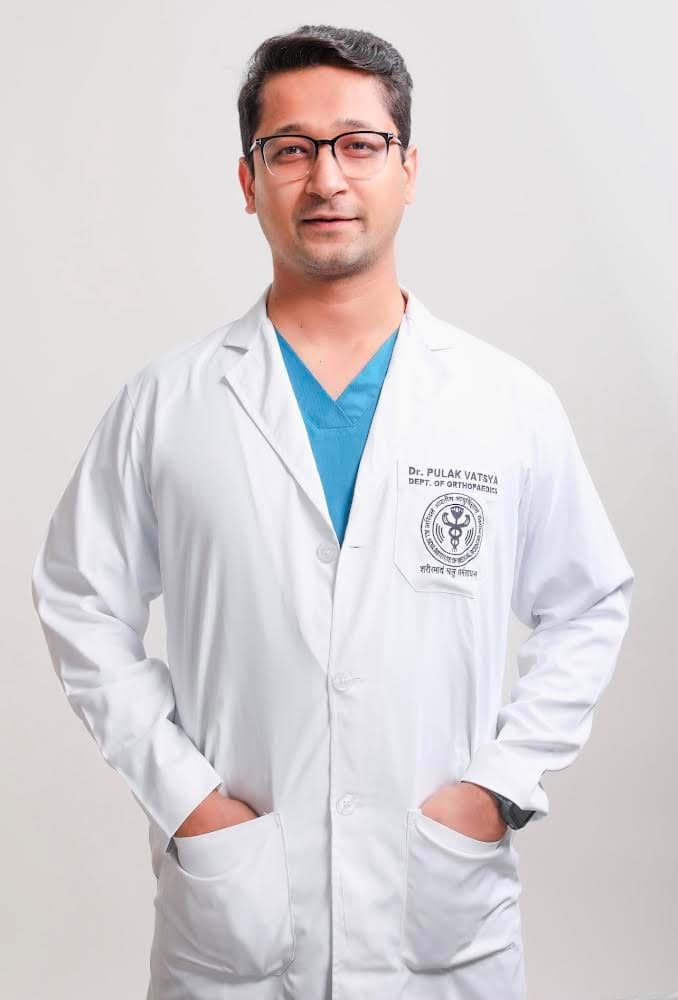
Upload your X-rays or MRI scans for Dr. Pulak Vatsya’s video evaluation.
Concerned About Your Knee or Joint Health?
Take our 90-second clinical Knee Reset Assessment or book a direct consultation with Dr. Pulak Vatsya.