The Anterior Cruciate Ligament (ACL) is the primary restraint preventing anterior translation of the tibia relative to the femur. High-velocity non-contact deceleration, sudden pivoting, or athletic impact frequently stress this ligament beyond tensile limits, resulting in a partial or complete tear.
1. Audible Pop with Immediate Giving-Way
Over 70% of patients who sustain an acute ACL disruption describe hearing or feeling a distinct "pop" inside the joint capsule at the moment of deceleration or landing. This mechanical sensation is accompanied by an immediate loss of structural knee confidence, causing the patient to fall or be unable to bear weight without the knee giving way.
2. Rapid Swelling Within 2 to 4 Hours (Hemarthrosis)
Because the ACL possesses an intra-articular vascular supply via the middle genicular artery, a torn ligament bleeds directly into the joint space. This causes tense, painful swelling known as acute hemarthrosis within 2 to 4 hours of injury. Swelling that develops slowly over 24 to 48 hours is more characteristic of isolated meniscus tears, whereas rapid-onset swelling strongly correlates with acute ligament rupture.
3. Inability to Pivot, Cut, or Change Direction
While walking straight forward on level ground may become manageable once acute swelling subsides, rotational stability is compromised. Attempting to pivot on the affected leg, step down stairs, or negotiate uneven surfaces triggers a sudden shifting sensation (the pivot-shift phenomenon).
4. Associated Joint Locking or Meniscus Signs
Up to 50% of acute ACL ruptures occur alongside lateral or medial meniscus tears. If a torn meniscus fragment displaces (such as a bucket-handle tear), it may physically block full extension of the joint, resulting in true mechanical knee locking. Immediate specialist examination and MRI imaging are required to evaluate meniscus reparability.
5. Recurrent Episodes of "Knee Giving Out"
Leaving an unstable ACL-deficient knee unmanaged often leads to recurrent giving-way episodes during everyday activities. Each episode causes abnormal shear stresses across the articular cartilage, exponentially increasing the risk of secondary meniscus tears and premature joint osteoarthritis.
Surgical vs Non-Surgical Decision Criteria
Not all ACL tears mandate surgery. Sedentary individuals without pivoting instability may succeed with non-surgical rehabilitation focusing on neuromuscular hamstring strengthening and core stability. Conversely, active individuals, athletes engaging in cutting or pivoting sports, and patients with concurrent repairable meniscus injuries benefit significantly from anatomical arthroscopic reconstruction.
Frequently Asked Questions
Q: Can a completely torn ACL heal without surgery?
Due to the intra-articular synovial fluid environment and absence of a stable blood clot matrix, complete mid-substance ACL tears do not reliably heal back to the femoral footprint. Partial tears with intact bundles may heal or stabilize with conservative bracing and targeted physical therapy.
Q: How soon should MRI imaging be performed after injury?
An MRI should ideally be obtained within 3 to 7 days post-injury once initial acute splinting is applied. This confirms the exact tear pattern and checks for associated meniscus or cartilage damage.
Q: What is the recovery timeline following ACL reconstruction?
Patients typically walk with crutches for 2 to 3 weeks, resume stationary cycling and jogging between 3 and 4 months, and progress to sport-specific drills with return-to-sport clearance between 8 and 12 months following comprehensive functional testing.
Related Guides & Treatment Pathways
Anatomical ACL Reconstruction Surgery
Single-bundle and double-bundle arthroscopic reconstruction protocols at StepUp Joints.
Knee Pain Care & Preservation
Non-surgical modalities, joint stabilization, and regenerative injections.
Free Knee Reset Assessment
Take our 90-second clinical knee health check to evaluate joint stability.
Concerned About Your Knee or Joint Health?
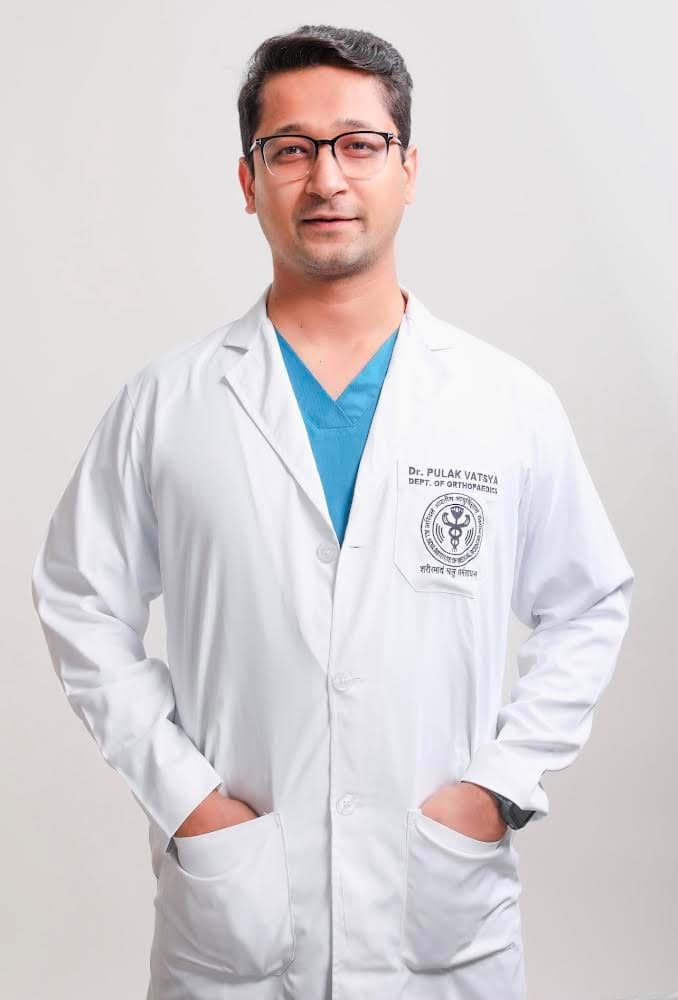
Take our 90-second clinical Knee Reset Assessment or book a direct consultation with Dr. Pulak Vatsya.